
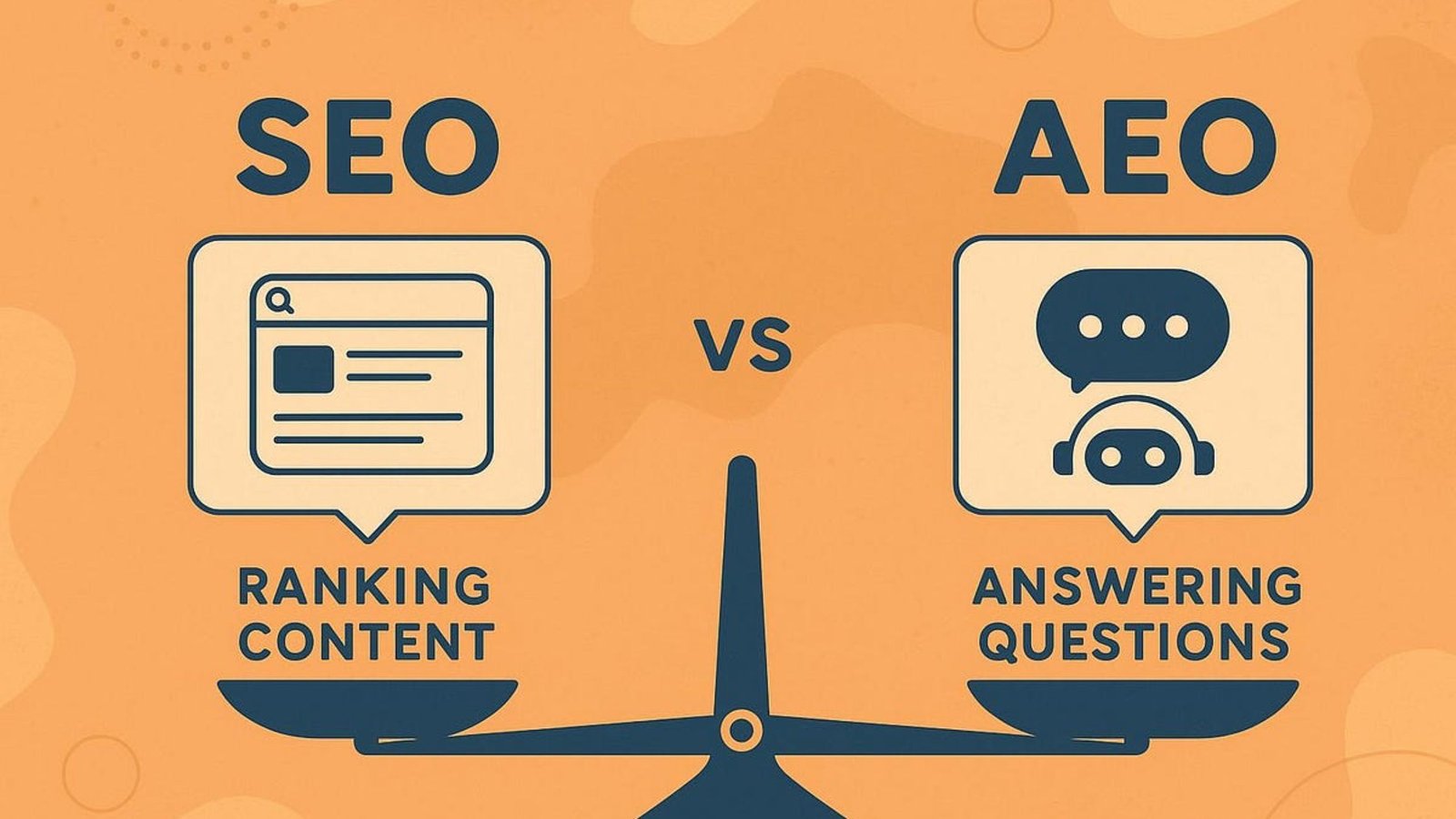
Search engines are no longer just lists of links. They are intelligent systems designed to understand intent and deliver direct, accurate answers. This shift has changed how businesses approach visibility and growth. Marketing Optimization is now at the center of this evolution, especially as companies compare Answer Engine Optimization with traditional SEO. Choosing the right strategy can determine how effectively your business attracts traffic, builds trust, and converts users.
Today’s users expect instant clarity. They ask full questions, use voice search, and rely on AI-powered summaries. As search behavior evolves, optimization strategies must evolve as well. This guide breaks down AEO and traditional SEO, explains their differences, and helps you determine which approach aligns best with your business goals.
What Is the Difference Between AEO and Traditional SEO?
The main difference between AEO and traditional SEO lies in how content is designed to meet user intent. Traditional SEO focuses on ranking web pages through keyword targeting, backlinks, and technical improvements. AEO focuses on delivering direct answers to user questions in featured snippets, People Also Ask boxes, voice search results, and AI-generated responses.
Traditional SEO emphasizes visibility through rankings. AEO emphasizes clarity and usefulness through answers. Both aim to increase exposure, but they operate at different points in the search journey.
Understanding this distinction helps businesses adapt their content strategy to modern search expectations.
Understanding Traditional SEO and Its Core Principles
Traditional SEO has long been the foundation of digital marketing. It is built on improving relevance, authority, and accessibility.
- Keyword research plays a central role. Content is optimized around specific phrases users search for, with strategic placement in titles, headings, and body text. This approach works well for exploratory and commercial searches.
- Backlinks remain a major ranking signal. Links from authoritative websites signal trust and relevance to search engines. Building these links requires time and consistent effort.
- Technical SEO ensures that search engines can crawl and index your site effectively. Factors such as site speed, mobile responsiveness, clean URLs, and internal linking all support stronger rankings and better user experience.
What Is Answer Engine Optimization and How Does It Work?
Answer Engine Optimization is designed for how people search today. Users ask questions in natural language and expect immediate answers.
- AEO focuses on structuring content so search engines can easily extract concise, accurate responses. This includes using question-based headings, clear formatting, and direct explanations.
- Semantic SEO plays a major role in AEO. Search engines analyze related entities and concepts such as natural language processing, conversational queries, structured data, voice assistants, featured snippets, and AI-driven search results to understand context.
How Marketing Optimization Shapes Both Strategies
Marketing Optimization connects SEO and AEO to real business outcomes. It ensures that visibility leads to engagement, trust, and conversions.
- When content is optimized strategically, it supports the entire customer journey. Informational content builds awareness, answer-focused content builds credibility, and conversion-focused elements guide users toward action.
- Marketing Optimization helps businesses decide how to balance effort between ranking-based and answer-based visibility.
Traffic Potential: AEO vs Traditional SEO
- Traditional SEO typically drives higher volumes of organic traffic. Users click through search results to compare options and explore topics.
- AEO attracts users with stronger intent. When someone receives a clear answer quickly, trust forms faster. Even when clicks are fewer, engagement and conversion potential are often higher.
Both approaches deliver value, but in different ways.
Authority and Trust Building Compared
- Traditional SEO builds authority over time through consistent rankings and backlinks. It establishes domain credibility across a broad range of keywords.
- AEO builds authority by positioning your content as the trusted source for answers. Appearing in featured snippets or voice search responses signals expertise directly to users.
Both methods contribute to trust, but AEO often accelerates perceived authority.
Content Structure Differences Between AEO and SEO
- Traditional SEO content often prioritizes depth and comprehensive coverage. Sections may be longer and more detailed.
- AEO content prioritizes clarity and accessibility. Answers are placed immediately after headings, followed by supporting context.
This structure benefits both users and search engines without sacrificing informational depth.
When Traditional SEO Is the Better Choice
Traditional SEO remains essential for many businesses.
E-commerce sites, publishers, and brands targeting competitive keywords rely on strong rankings to drive traffic. Long-term brand discovery and content libraries still depend heavily on traditional optimization.
Traditional SEO provides a stable foundation that supports broader digital growth.
When AEO Produces Better Results
AEO works especially well for service-based businesses, B2B companies, and brands that rely on expertise and trust.
It is ideal for educational content, how-to guides, and problem-solving resources. AEO also supports voice search and AI-generated results, which continue to grow in importance.
Combining AEO and SEO for Best Results
The most effective strategy blends both approaches.
- Traditional SEO attracts users. AEO ensures they find value immediately.
- By structuring content around real questions while maintaining strong SEO fundamentals, businesses can address every stage of the funnel.
This approach supports users who want to generate your own understanding and make informed decisions based on clear information.
Content Types That Work Well for Both Approaches
Certain formats perform well in both AEO and traditional SEO.
- How-to guides provide direct answers while ranking for broader topics. FAQs address multiple questions in one place, increasing answer visibility.
- Pillar content supported by topic clusters builds authority and improves internal linking. As readers progress, natural pathways often lead them to engage further.
Measuring Performance in AEO and Traditional SEO
- Traditional SEO success is measured through rankings, organic traffic growth, and backlink acquisition.
- AEO success is measured through featured snippet visibility, People Also Ask appearances, voice search impressions, and engagement quality.
Both strategies should ultimately be evaluated based on conversions and business impact.
Common Mistakes When Choosing an Optimization Strategy
One common mistake is treating AEO and SEO as competing strategies.
- Ignoring AEO limits modern visibility. Ignoring traditional SEO weakens long-term growth.
- Another mistake is focusing solely on traffic volume instead of intent and relevance. Balanced optimization avoids these issues.
User Experience and Its Impact on Both Strategies
- User experience influences rankings and answer selection.
- Fast-loading pages, mobile-friendly design, and clean layouts improve engagement. Clear navigation and logical content flow help users find answers quickly.
- Positive user signals reinforce trust with search engines.
The Role of Structured Data
Structured data helps search engines understand content context.
Schema markup improves eligibility for rich results and answer features. FAQ and HowTo schema support both AEO and traditional SEO when implemented correctly.
The Future of AEO and SEO
Search engines will continue to prioritize relevance, clarity, and user satisfaction.
AI-driven answers and conversational search will expand. Businesses that invest in structured, intent-driven content will gain a competitive advantage.
Traditional SEO will remain important, but AEO will play an increasingly significant role.
Frequently Asked Questions
What is the main difference between AEO and traditional SEO?
AEO focuses on providing direct answers, while traditional SEO focuses on ranking web pages.
Can small businesses benefit from AEO?
Yes, AEO allows small businesses to compete by targeting specific, high-intent questions.
Does AEO reduce website traffic?
AEO may reduce clicks for some queries but often improves trust and conversion quality.
How long does it take to see AEO results?
Results can appear faster than traditional SEO when content is well-structured.
Should businesses use both strategies?
Yes, combining both creates a balanced and future-ready optimization approach.
Conclusion
Deciding between AEO and traditional SEO is not about choosing one over the other. It is about adapting to how users search today. Marketing Optimization plays a vital role in blending these strategies into a unified system that drives visibility, trust, and results.
Businesses that embrace both ranking-based and answer-based optimization are better positioned for long-term success. By focusing on intent, clarity, and authority, brands can thrive in an evolving search landscape. Tajaret provides expert Marketing Optimization services to help businesses implement the right balance of AEO and traditional SEO for sustainable growth.



0 Comments